
Picture a classic pedicure and you probably imagine your feet sinking into a warm, bubbly bath before anything else happens. So a pedicure with no water at all may sound a little odd. Where’s the relaxing soak? Isn’t that the best bit?
Stick with us, because a dry pedicure (also called a waterless pedicure) has recently become a favourite with nail pros and clients alike, and for some very good reasons. It promises longer-lasting polish, more precise results and a more hygienic treatment, mainly because your feet don’t touch water. We’ll walk you through what a dry pedicure actually is, how it differs from the traditional wet version, what happens during the treatment, and whether it’s right for your feet. Basically, everything you need to know.

What is a dry pedicure?
A dry pedicure is exactly what it sounds like: a pedicure done entirely without soaking your feet in water. Instead of a foot bath, your therapist works on dry skin and nails. They use filing, gentle exfoliation, a professional electric file (an e-file), careful cuticle work and rich moisturisers to clean up, smooth and refine your feet.
The thinking is that dry skin makes it easier to see and treat problem areas, especially hard skin and calluses. Skipping the soak also keeps your polish looking fresh for longer and means the whole treatment is more hygienic. It’s a modern, results-focused take on foot care, and it’s especially popular in higher-end and specialist salons.
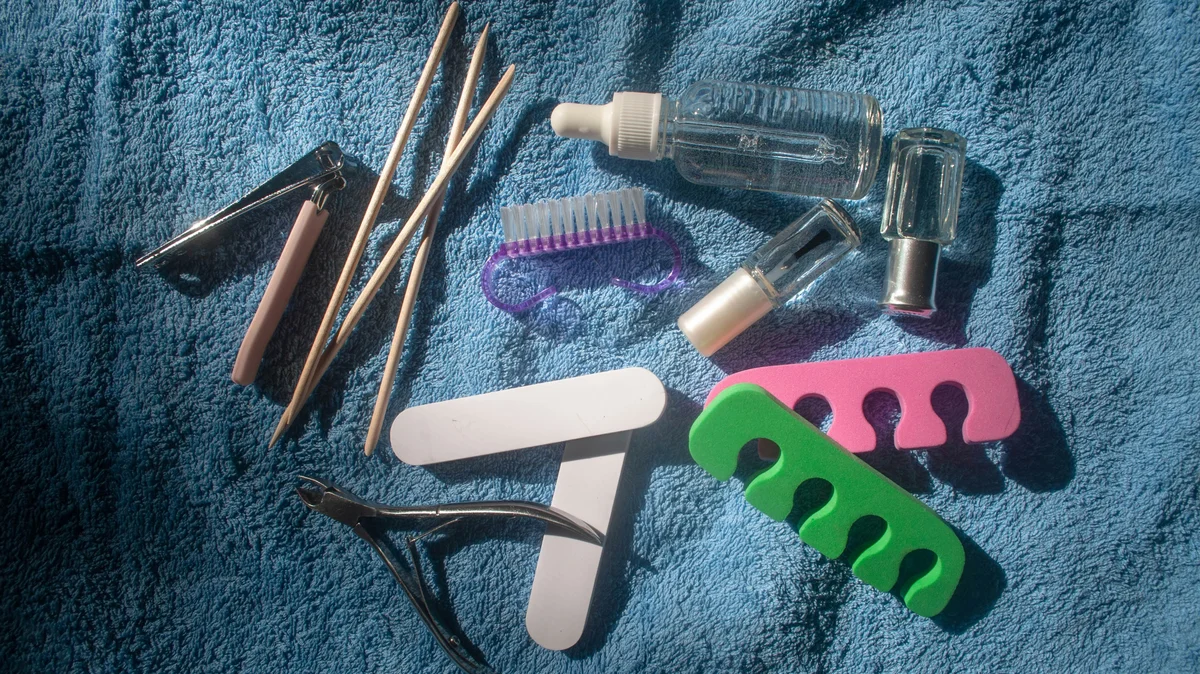
Waterless, Russian or dry: the names explained
These names mostly describe the same thing. “Waterless pedicure” is the most common alternative and means exactly that. Some salons say “Russian pedicure”, which usually refers to a very precise, dry, e-file-based technique that started in Eastern Europe and focuses on meticulous cuticle and skin work.
The terms overlap a fair bit, and salons use them slightly differently, so if you’re booking it’s always worth checking exactly what’s included. The common thread is simple though: no soaking, and a focus on accurate, long-lasting results.
Dry pedicure versus wet pedicure
The headline difference is the water, but that one change ripples out into several others. This is how the two compare:
| Feature | Dry pedicure | Wet pedicure |
|---|---|---|
| Foot soak | None | Feet soaked in warm water |
| Hard skin removal | Very targeted, on dry skin | Softened skin, can be harder to judge |
| Polish longevity | Tends to last longer | Water can affect adhesion |
| Hygiene | No shared foot bath | Foot bath must be thoroughly sanitised |
| The relaxation factor | Quick and efficient | The soak feels indulgent |
| Best for | Precise results, long-lasting polish | A relaxing, spa-like experience |
Neither is “better” across the board. They simply suit different priorities. If you’re after precision, longevity and efficiency, dry wins. If a warm, blissful soak is the whole point for you, the traditional wet pedicure still holds its charm. Plenty of people happily switch between the two depending on their mood and what their feet need.
Why there’s no foot soak
Skipping the soak sounds odd, so here’s the reasoning. When you soak your feet, the skin softens and swells, which sounds helpful but actually makes it harder for your therapist to see where the hard skin ends and the healthy skin begins. Working on dry skin lets them target calluses and rough patches far more accurately, so you get a cleaner, more even result.
There’s a hygiene angle too, and it’s a big one. Shared foot baths need scrupulous cleaning between clients, and skipping them removes the risk entirely (which answers a very common question: yes, dry pedicures are generally considered more hygienic). And because your nails aren’t waterlogged, polish and gel grip better and last longer. So while the soak feels like a treat, going without it really does improve the results.
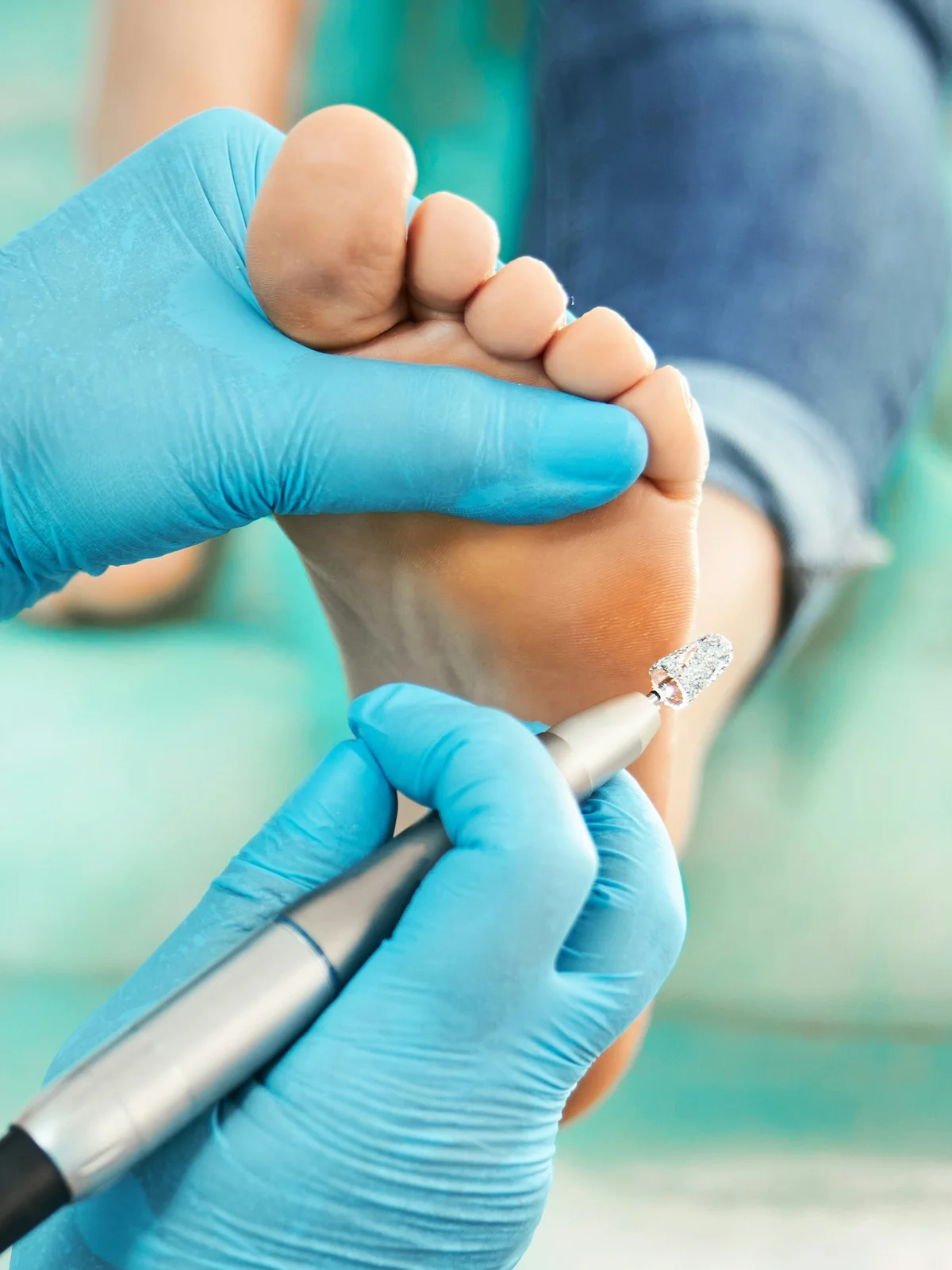
What happens during a dry pedicure
A dry pedicure follows a similar flow to a traditional one, just minus the bath. Your therapist typically works through these stages:
- Cleansing and assessment. Your therapist cleans and sanitises your feet with products rather than water, then takes a look at any problem areas.
- Nail shaping. They trim and file your nails to your preferred shape.
- Cuticle work. Your therapist tidies your cuticles, often using an e-file for a neat finish.
- Hard skin and callus removal. Working on dry skin, they buff away calluses and rough patches with files and an e-file, targeting exactly the right spots.
- Exfoliation. A scrub or exfoliating product sloughs off dead skin to leave your feet smooth.
- Massage and moisture. A nourishing foot massage with rich creams or oils rehydrates the skin (and yes, it’s still lovely).
- Polish, if you like. Finally, your therapist applies polish or gel to clean, dry nails for a long-lasting finish.
Because much of this uses accurate tools like the e-file, it really is a treatment for a trained professional. Try it at home and it’s all too easy to overdo it and damage the skin or nail.
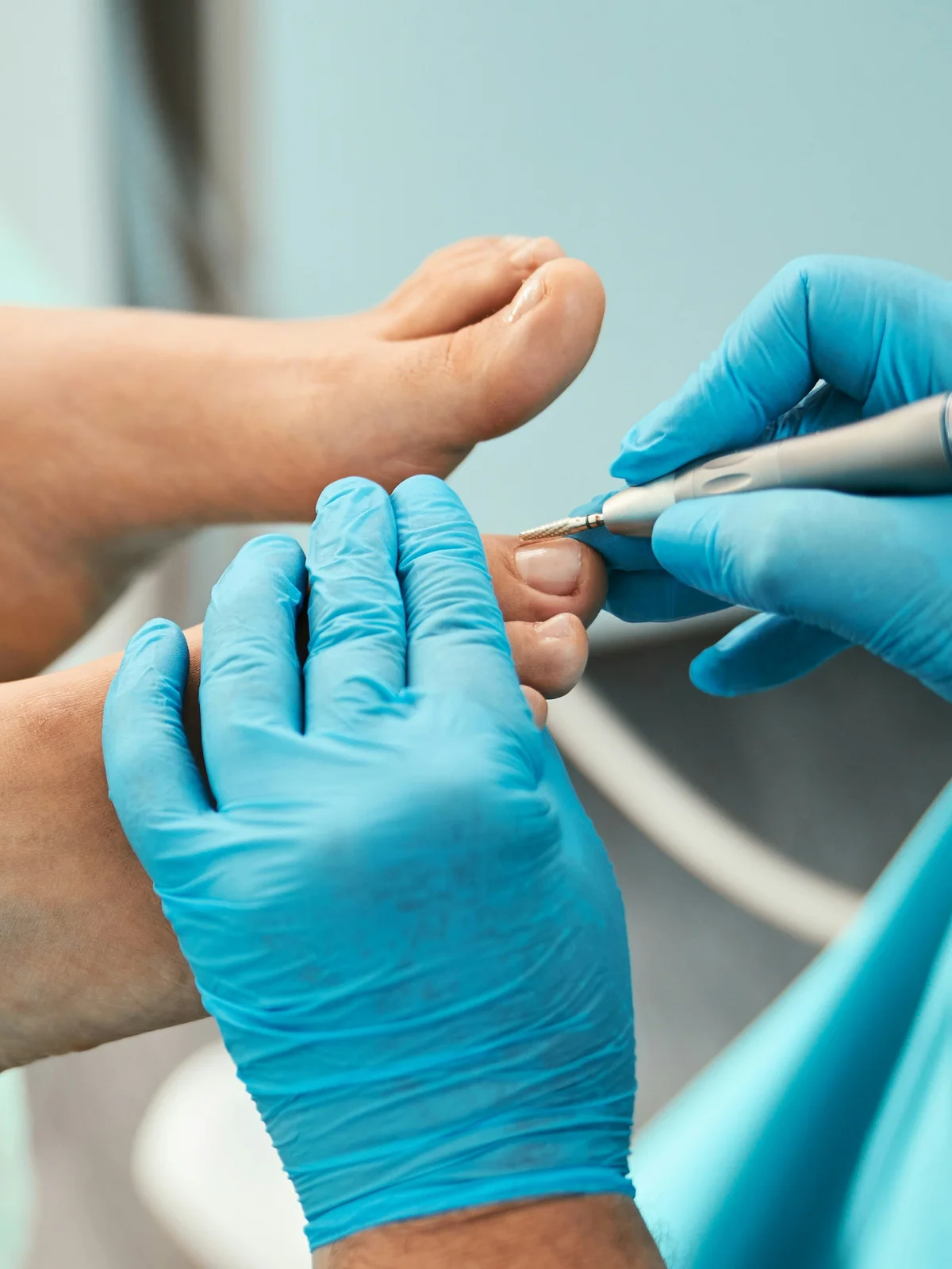
The benefits of a dry pedicure
So why are so many people making the switch? The appeal comes down to a handful of real advantages:
- Longer-lasting polish. Without waterlogged nails, polish and gel bond better and stay put for longer.
- More precise results. Working on dry skin means calluses and hard skin come off exactly where needed, for a smoother, more even finish.
- Better hygiene. No shared foot bath means one less thing to think about.
- Efficiency. Skipping the soak makes the treatment quicker, so it’s easy to fit into a lunch break.
- Great for callus-prone feet. If you struggle with hard skin, the accuracy of dry work often delivers a noticeably better result.
It trades a few minutes of soaking bliss for results that look neater and hold up better. For a lot of people, that’s a very worthwhile swap.
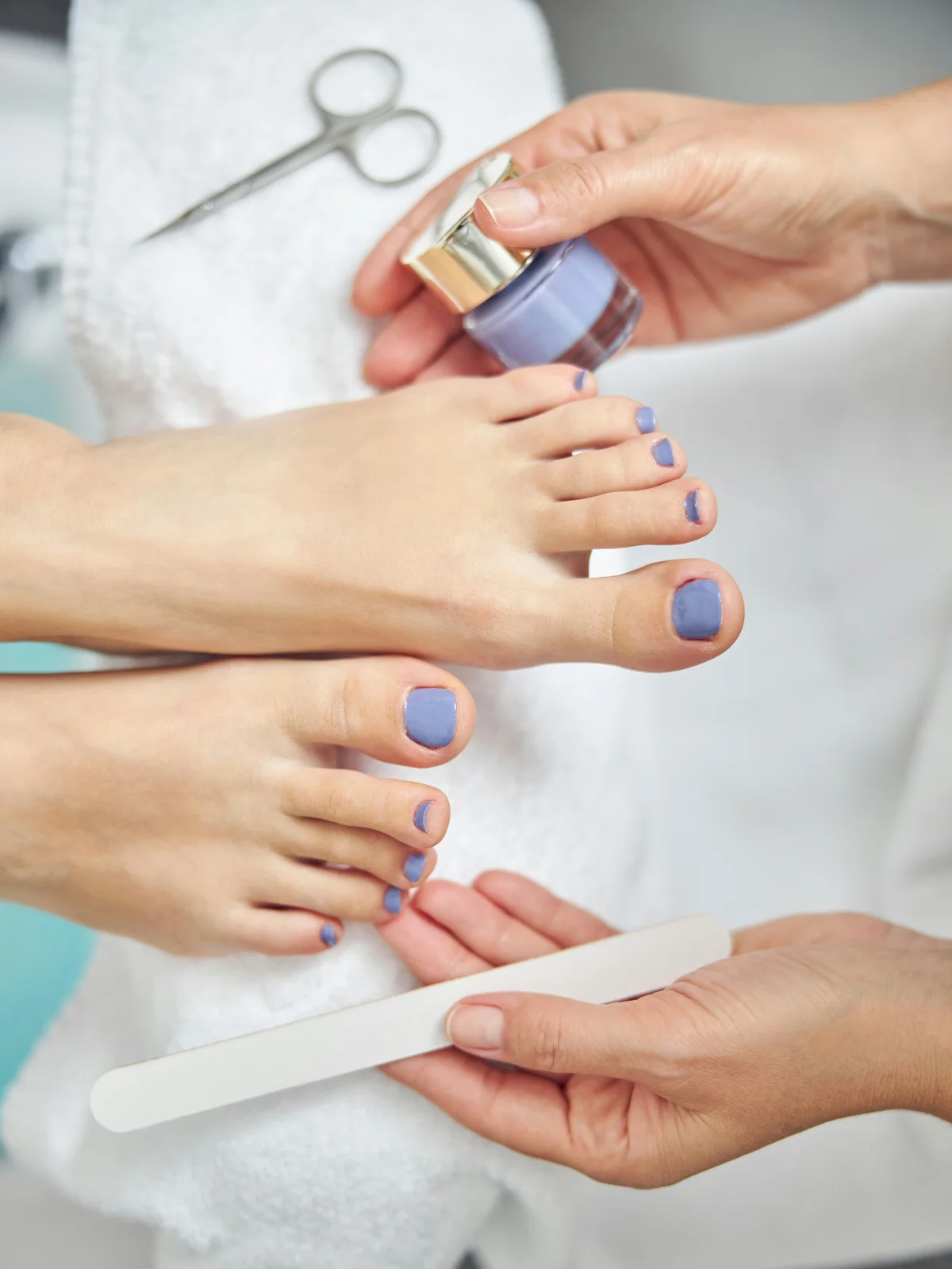
Do you still get a foot massage?
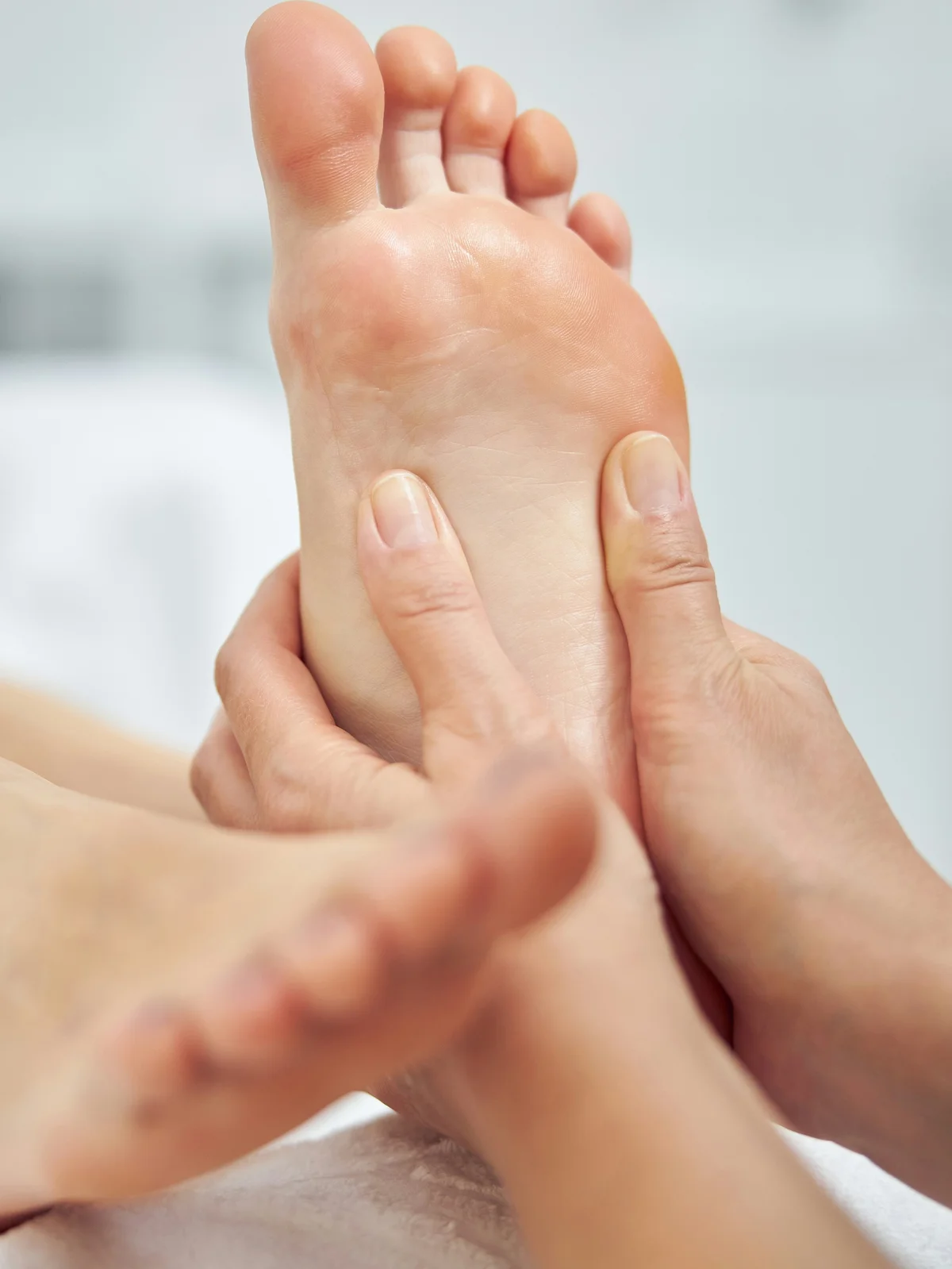
Yes, a dry pedicure almost always includes a lovely foot massage, so you won’t miss out on the pampering. Losing the soak doesn’t mean losing the relaxation. It just moves the indulgent bit to the end.
Once the nail and skin work is done, your therapist typically treats your feet to a nourishing massage with rich creams or oils. It rehydrates the skin, feels wonderful and helps you leave feeling thoroughly looked after. So while the format is more efficient than a traditional pedicure, it’s far from clinical. You still get that blissful, feet-up moment (arguably the whole point). If a really generous massage matters to you, just check what’s included when you book, as it can vary a little between salons and treatment tiers.
Why polish and gel last longer
It comes down to water. When your nails soak, they absorb some of it and briefly expand, and once they dry out and contract again, polish applied over the top is more likely to lift, chip or peel.
By keeping everything dry from start to finish, a dry pedicure gives polish and gel a clean, stable surface to bond to, which helps your colour stay put for longer. If you’re forever frustrated by pedicures chipping within days, this alone can be reason enough to go waterless.
Who a dry pedicure suits best
A dry pedicure works for lots of people, but it really shines for certain feet. If you have stubborn calluses or hard skin, the precise dry technique tends to tackle them more effectively. If you love a long-lasting gel or polish, the improved adhesion is a real bonus. And if you’re short on time, the efficiency makes it easy to slot in.
There’s an important caveat, though, and it’s one we won’t gloss over. If you have diabetes, poor circulation, neuropathy or another condition that affects your feet, take extra care with any foot treatment. Skin is more vulnerable, and small injuries can be slower to heal. Speak to your doctor or a podiatrist about what’s safe for you. And always tell your therapist about any health conditions when you book, so they can look after you properly (or point you towards a medical foot specialist if that’s the better route).

Very dry feet and cracked heels
No, a dry pedicure isn’t a bad idea for already-dry feet or cracked heels. In fact, the targeted approach often makes it a great choice for tackling stubborn hard skin and rough heels, because your therapist can see and treat exactly what needs work.
While there’s no soak, a good dry pedicure finishes with plenty of nourishing exfoliation, massage and rich moisturiser, so your feet still get a proper drink of hydration by the end. If cracked heels are a persistent problem, mention it when you book so your therapist can focus on that area, and they’ll advise on keeping heels soft between visits. For very severe cracking or painful heels, you’ll want a medical pedicure with a specialist.
Dry, Russian and medical pedicures explained
A quick untangling of the terminology. A dry (or waterless) pedicure is the everyday cosmetic version done without soaking. A Russian pedicure usually means a highly precise, dry, e-file-focused technique with especially meticulous cuticle and skin work, often producing a very clean, detailed finish.
A medical pedicure (sometimes called a “medi pedi”) goes a step further again. A specially trained professional or podiatrist carries it out in a clinical setting, focusing on foot-health issues like problem calluses, cracked heels and nail conditions rather than looks alone. If your needs are more about foot health than a pretty polish, a medical pedicure may be the better fit, and it’s worth seeking out a qualified specialist for that.

How often to book a dry pedicure
As a general guide, every four to six weeks keeps your feet looking and feeling their best. It really depends, though, on how quickly your hard skin builds up and how fast your nails grow. If you’re prone to calluses or you’re on your feet all day, you might like to go a little more often.
If you’ve had gel polish applied, rebook in line with when it needs removing and refreshing, usually around the three to four week mark, to keep everything neat and healthy. Your therapist will happily suggest a rhythm that suits your feet.
Keeping your feet smooth between appointments
A dry pedicure gives you a lovely, smooth starting point, and a little home care keeps your feet looking their best until your next visit. And the good news is that none of it is complicated:
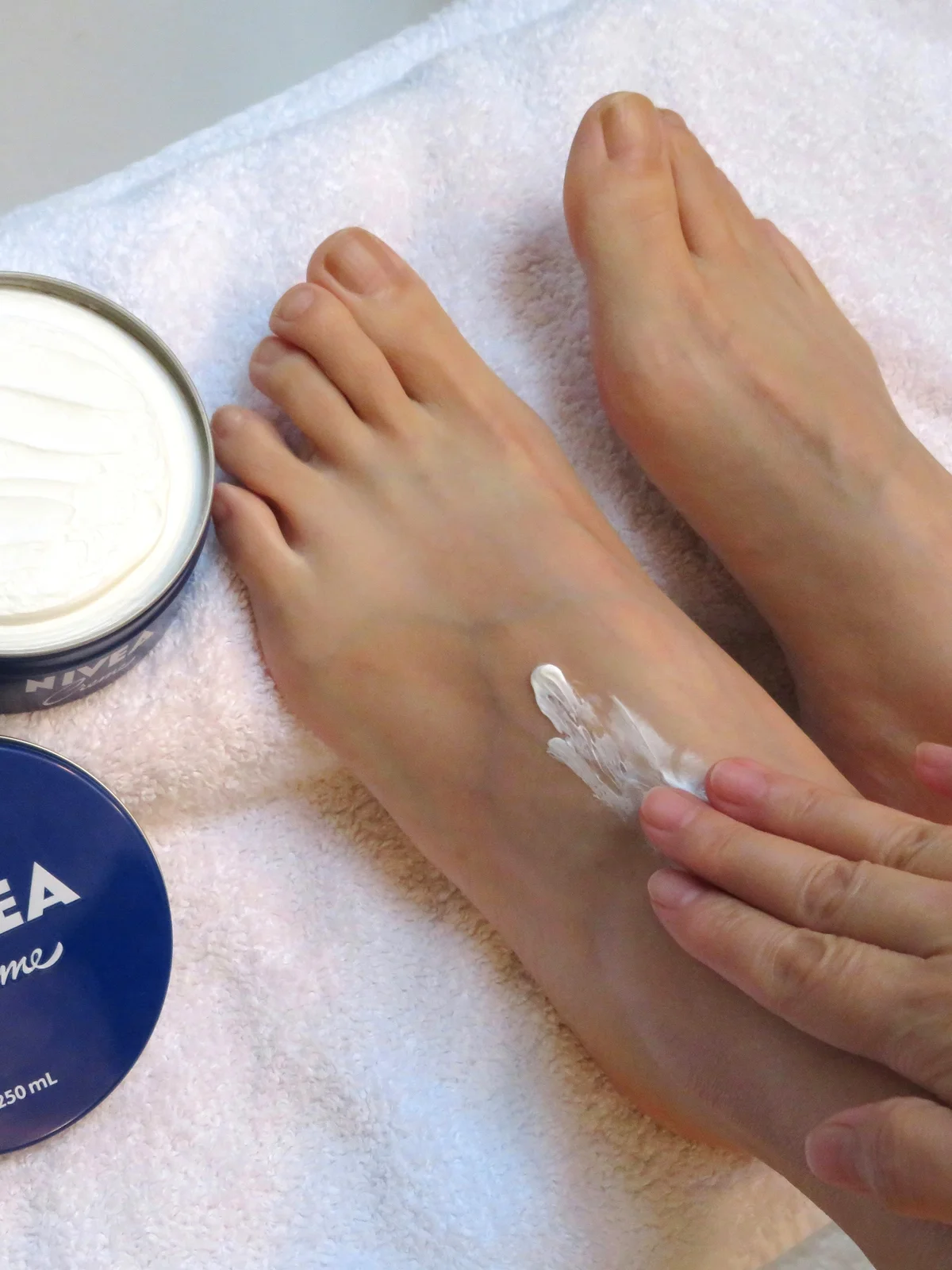
- Moisturise your feet daily, ideally with a rich foot cream, paying special attention to your heels and any dry patches.
- Gently exfoliate at home once or twice a week to stop hard skin building back up too quickly.
- Wear well-fitting, comfortable shoes, since ill-fitting footwear is a common cause of calluses and rough patches.
- Slip on cotton socks after moisturising at night to help the cream sink in (an oldie but a goodie).
- Resist the urge to pick or scrape at hard skin yourself, which can damage healthy skin and cause more problems than it solves.
Keep this up and you’ll walk into your next appointment with feet that already feel halfway there.
What a dry pedicure costs
Prices come in around €50-€75 but they vary depending on where you live, the salon, and exactly what the treatment includes. As a rule, dry and specialist pedicures can sit a little higher than a basic wet pedicure, reflecting the precision work and professional tools involved, though it really does differ from salon to salon.
Rather than simply hunting for the lowest price, weigh up what’s included (nail work, callus removal, massage, polish) alongside the salon’s reputation and hygiene standards. Skilled work lasts longer and looks better. Medical pedicures, carried out in a clinical setting by a specialist, typically cost more again, as you’d expect for a more health-focused treatment. Comparing a few salons near you is the easiest way to find the right balance of quality and price for your budget.
Booking a dry pedicure
Not every salon offers dry pedicures, but a quick check on Treatwell will show you the salons near you offering the waterless version, so you can compare treatments, read reviews and book the one that suits you best. Booking online also makes it easy to see availability and pick a time that works around your day, with no phone call required. Sorted.
When you’re choosing where to go, look for skilled technicians and good hygiene standards. And don’t be shy about mentioning any concerns (dry heels, stubborn calluses, a health condition) so they can tailor the treatment to you.
Ready for smoother feet?
The dry pedicure might upend everything you thought you knew about foot care. But the results speak for themselves: precise callus removal, longer-lasting polish and a more hygienic treatment, all without a drop of water. Now you know how it works, who it suits and what to expect, the only thing left is to feel it for yourself. Browse salons near you on Treatwell, read the reviews, compare what’s included and book for whenever suits, whether that’s a lunch break, an evening or a lazy weekend. Your feet will be smoother than ever.
FAQs
What is a dry pedicure called?
A dry pedicure is also known as a waterless pedicure, and in some salons as a Russian pedicure (which refers to a very precise, e-file-based dry technique). They all share the same core idea of skipping the foot soak in favour of working on dry skin for a neater, longer-lasting result.
Are dry pedicures more hygienic?
Generally, yes. Dry pedicures skip the shared foot bath, which removes one potential source of cross-contamination. For many people, the absence of a communal soak is a reassuring plus. Just check that the salon maintains good hygiene in general and properly sanitises its tools.
How do you do a dry pedicure?
A therapist cleans and sanitises the feet without water, then shapes the nails, tidies the cuticles, and removes hard skin and calluses precisely using files and an electric file, before exfoliating, massaging and moisturising, and applying polish if you'd like. Because it relies on precise professional tools, it's best done by a trained technician rather than at home.
Is a dry pedicure safe for diabetics?
Anyone with diabetes should take extra care with foot treatments and check with their doctor or a podiatrist first, as skin is more vulnerable and injuries heal more slowly. Always tell your therapist about your condition when booking, and consider a medical pedicure with a specialist for the safest, most appropriate care.
Is a dry pedicure better than a regular pedicure?
Neither is universally better, they suit different priorities. A dry pedicure offers more precise callus removal, longer-lasting polish and better hygiene, while a traditional wet pedicure delivers that relaxing, spa-like soak. The right choice comes down to whether you want results and efficiency or pure relaxation.